Technology does not transform industries overnight. It does so gradually, then suddenly — through years of development, adoption, and refinement that can make the eventual disruption seem inevitable in hindsight. Investors who understand this dynamic, and who have the patience and expertise to back the right businesses through that full arc, are the ones who capture the most significant returns.
Why Technology Investment Demands a Long-Term Perspective
The popular image of technology investment is one of rapid cycles: early-stage venture bets, aggressive growth phases, and exits within five to seven years. That model has produced spectacular returns in certain contexts, but it is not the only — or even the most reliable — way to build wealth through technology.
Rheinstein Investment takes a different approach. We focus on established and growing private companies that are applying technology to transform industries with deep roots: advanced manufacturing, industrial machinery, construction, logistics, and related sectors. These are not the consumer internet businesses that dominate the headlines. They are the backbone of the European and EMEA economy, and they are in the midst of a profound technological transformation that creates significant investment opportunity for those positioned to recognise and capture it.
As a privately owned Swiss investment company with more than five decades of operational history, we have the perspective to look beyond the current hype cycle and identify the technologies that will create lasting structural advantage. We are not chasing the next quarterly return. We are building value over the timeframes that technology adoption actually requires.
The Industrial Technology Revolution: An Underappreciated Opportunity
While much investment capital has flowed into consumer technology, fintech, and software-as-a-service over the past decade, the transformation of industrial and manufacturing businesses through technology has received comparatively less attention — and correspondingly less capital. This creates precisely the kind of opportunity that Rheinstein is positioned to capture.
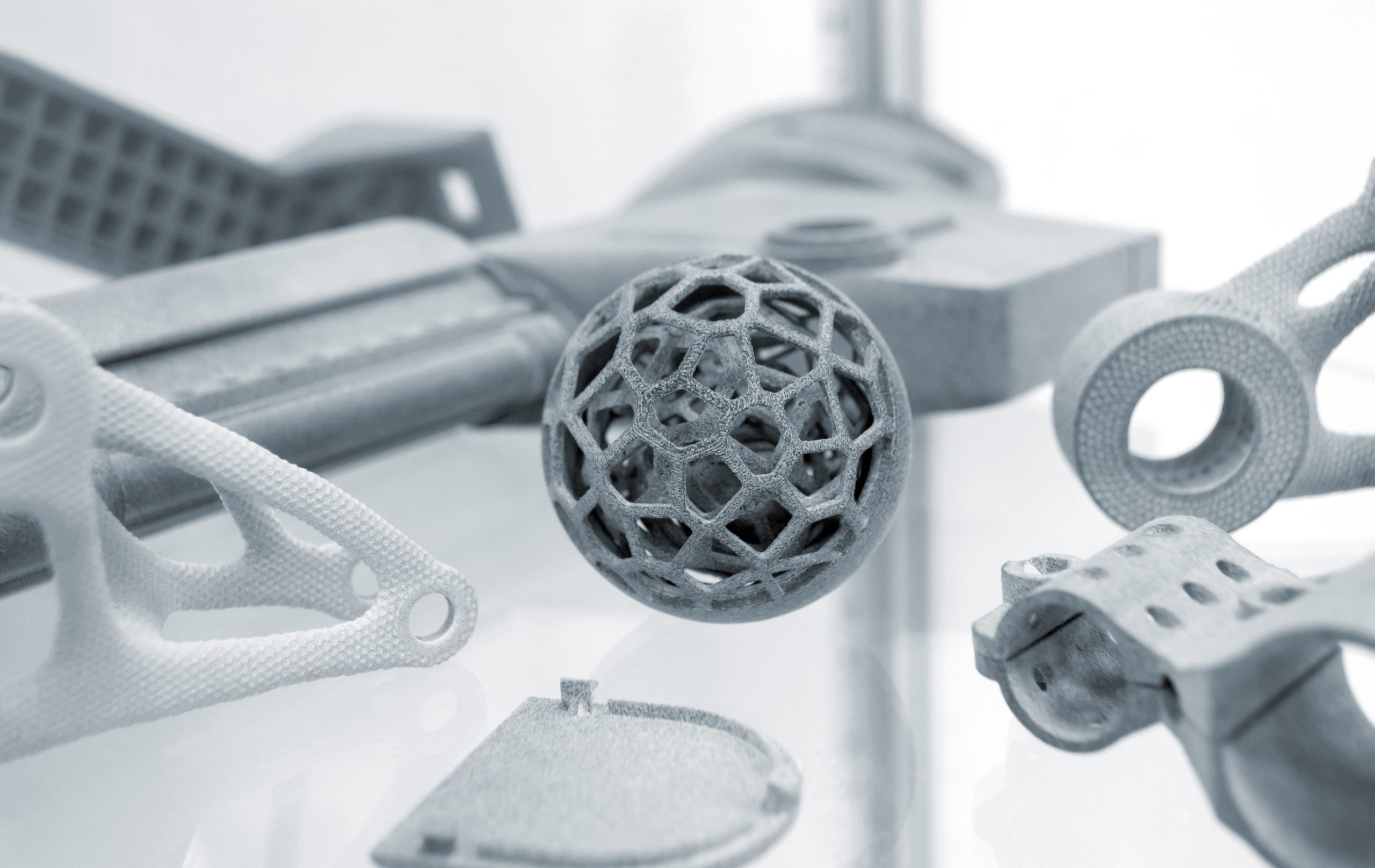
Advanced manufacturing is being reshaped by a convergence of technologies: industrial automation and robotics, artificial intelligence and machine learning applied to production optimisation, additive manufacturing, advanced materials science, and the Industrial Internet of Things (IIoT). These technologies are not emerging — they are being deployed at scale across European manufacturing facilities right now, generating measurable improvements in productivity, quality, and cost efficiency.
Companies that successfully integrate these technologies into their operations are achieving competitive advantages that compound over time. They are producing higher-quality products with lower defect rates. They are reducing energy consumption at a moment when energy costs have become a critical determinant of industrial competitiveness. They are building the data infrastructure that will underpin the next generation of production optimisation. And they are attracting and retaining engineering talent by offering technically sophisticated working environments.
For Rheinstein, this creates a clear investment thesis: identify well-managed industrial and manufacturing businesses in the EMEA region that are applying technology to build structural advantage, provide them with the capital and strategic support they need to accelerate that transformation, and hold those investments long enough to realise the full value of the competitive positions they are building.
Artificial Intelligence and Machine Learning: From Promise to Industrial Reality
The conversation around artificial intelligence in investment circles has, in recent years, been dominated by large language models and consumer-facing applications. But the most commercially significant near-term applications of AI are arguably in industrial settings: predictive maintenance, quality control, production scheduling, demand forecasting, and supply chain optimisation.
AI-driven predictive maintenance, for example, allows manufacturers to anticipate equipment failures before they occur, dramatically reducing unplanned downtime. In capital-intensive industries, unplanned downtime is one of the largest sources of value destruction. A well-implemented predictive maintenance system can reduce downtime by forty to sixty percent while extending equipment life — a financial impact that pays back the implementation cost within months and continues to generate value indefinitely thereafter.
Quality control is another domain where AI is moving from experimentation to mainstream deployment. Computer vision systems can inspect products at speeds and accuracy levels that are simply not achievable by human operators. In industries where quality defects carry significant cost — whether through warranty claims, customer returns, or reputational damage — the economic case for AI-driven quality control is compelling.
Rheinstein actively seeks investment opportunities in businesses that are applying AI and machine learning in these ways: not as a headline claim, but as a genuine source of operational advantage. We look for businesses where technology adoption is measurable in the income statement and the balance sheet, not just in marketing materials.
The Energy Transition as a Technology Investment Opportunity
The decarbonisation of the European economy is not merely an environmental imperative — it is one of the most significant technology-driven investment opportunities of the current decade. The transition to renewable energy, the electrification of industrial processes, the development of energy storage and grid management technologies, and the deployment of hydrogen as an industrial feedstock and energy carrier are all creating new markets and restructuring existing ones.
For companies in Rheinstein’s core sectors — advanced manufacturing, industrial machinery, construction — the energy transition creates both challenge and opportunity. The challenge is clear: legacy processes that are energy-intensive or carbon-heavy face rising costs and regulatory pressure. The opportunity is equally clear: businesses that develop or adopt clean energy technologies will enjoy lower operating costs, stronger regulatory positioning, and access to the growing pool of capital that is explicitly allocated to sustainable investments.
Rheinstein’s investment approach is attentive to this dimension of industrial technology. We look for businesses that are making genuine progress on energy efficiency and decarbonisation — not because of regulatory compliance pressure, but because the economics are compelling. In a European energy environment where prices remain structurally elevated relative to historical norms, energy efficiency is not a sustainability initiative; it is a commercial necessity and a source of competitive advantage.
Digital Infrastructure and Connectivity: The Foundation of Industrial Transformation
The industrial technology transformation that we are observing across the EMEA region rests on a foundation of digital infrastructure: industrial-grade connectivity, edge computing, cloud-based data management, and cybersecurity systems capable of protecting increasingly connected production environments. Investment in this infrastructure is a prerequisite for deploying the advanced applications — AI, automation, IIoT — that generate the most visible value.
Many of the businesses in Rheinstein’s investment universe are in the process of building or upgrading this infrastructure. The investment required is significant, but the returns are also significant: a fully connected manufacturing facility, capable of capturing and analysing production data in real time, is a fundamentally more valuable and more defensible business than one that relies on manual reporting and reactive management.
We support our portfolio companies through this infrastructure build-out — not just with capital, but with strategic guidance on technology selection, implementation sequencing, and integration. Our experience across multiple industrial sectors gives us the perspective to help management teams navigate the complexity of digital transformation without the mis-steps that often make it more expensive and more disruptive than it needs to be.
Our Technology Investment Framework
Rheinstein’s approach to technology investment is not driven by trend-following or by the desire to be associated with exciting narratives. It is driven by a rigorous analytical framework that asks a consistent set of questions about every technology investment opportunity we evaluate.
We ask whether the technology in question addresses a genuine and significant operational challenge, or whether it is solving a problem that does not matter enough to justify the investment. We ask whether the management team has the combination of domain expertise and technological sophistication needed to implement the technology effectively. We ask whether the competitive advantage created by the technology is durable — whether it will be difficult for competitors to replicate — or whether it is a transient first-mover benefit that will erode within a few years.
We ask whether the business has the operational foundation — the processes, the people, the data infrastructure — to absorb and exploit the technology it is adopting. And we ask whether the valuation at which we are investing reflects a realistic assessment of both the opportunity and the risks, or whether it is inflated by enthusiasm that has outrun the underlying commercial reality.
This framework is the product of more than fifty years of experience investing in businesses across economic cycles, technology transitions, and market disruptions. It is disciplined, it is rigorous, and it is designed to identify the opportunities that will create lasting value rather than the ones that simply look compelling in the current moment.
Building the Future, One Investment at a Time
Technology investment at its best is an act of conviction about the future. It requires the ability to look beyond the current state of an industry and imagine what it will look like when a particular technology has been fully absorbed and the competitive landscape has been reshaped.
Rheinstein brings that conviction to every investment we make. We believe in the transformative potential of industrial technology. We believe that the businesses that embrace this transformation — that invest in automation, in data, in energy efficiency, and in digital connectivity — will be the ones that define the competitive landscape of European and EMEA industry for the next generation. And we believe that investors who partner with those businesses, with the patience to see the transformation through, will be rewarded accordingly. If you are considering an investment in the technologies reshaping the industrial economy, we invite you to explore what a partnership with Rheinstein can offer. The transformation is underway. The question is whether you will be positioned to benefit from it.